Shoppers Don’t Abandon Carts. They Abandon Uncertainty.
 Ken Garff, Founder
Ecommerce teams spend a lot of time optimizing the path to purchase.
They improve product pages, simplify checkout, refine shipping options, and recover abandoned carts. These are all important parts of the buying journey.
But there’s a problem that can happen much earlier.
Some shoppers leave before they ever add a product to their cart. Not because checkout is complicated, but because they haven’t found the answers they need to make a decision.
The part of the ecommerce funnel you might be missing
Most ecommerce funnels track a familiar sequence:
Product page → Add to cart → Checkout → Purchase
This helps merchants understand what happens once shoppers reach the point of considering a purchase.
But the decision-making process often begins before that.
A shopper might discover a product, compare several options, check compatibility, and try to determine whether it’s right for their needs. If important questions remain unanswered, they may leave before taking any measurable step toward checkout.
That creates a gap between the funnel merchants track and the buying journey shoppers actually experience.
The visible funnel shows what shoppers do. It doesn’t always explain why they decide not to move forward.
What stops shoppers from adding a product to their cart?
For complex, technical, or expensive products, shoppers often need more than a product description and a list of specifications.
They may be asking themselves:
- Will this work with what I already own?
- Is this the right model for my needs?
- What’s the difference between these two options?
- Am I paying more for features I don’t actually need?
- Will this product solve the problem I’m trying to fix?
These questions can determine whether someone feels ready to buy.
The answers may already exist somewhere on the website. But if shoppers have to search through multiple pages, interpret technical specifications, or compare products manually, getting to a confident decision becomes harder.
Search helps shoppers locate an item. Guidance helps them feel confident enough to buy it.
The invisible buying journey
For stores selling products that require more consideration, the journey often looks more like this:
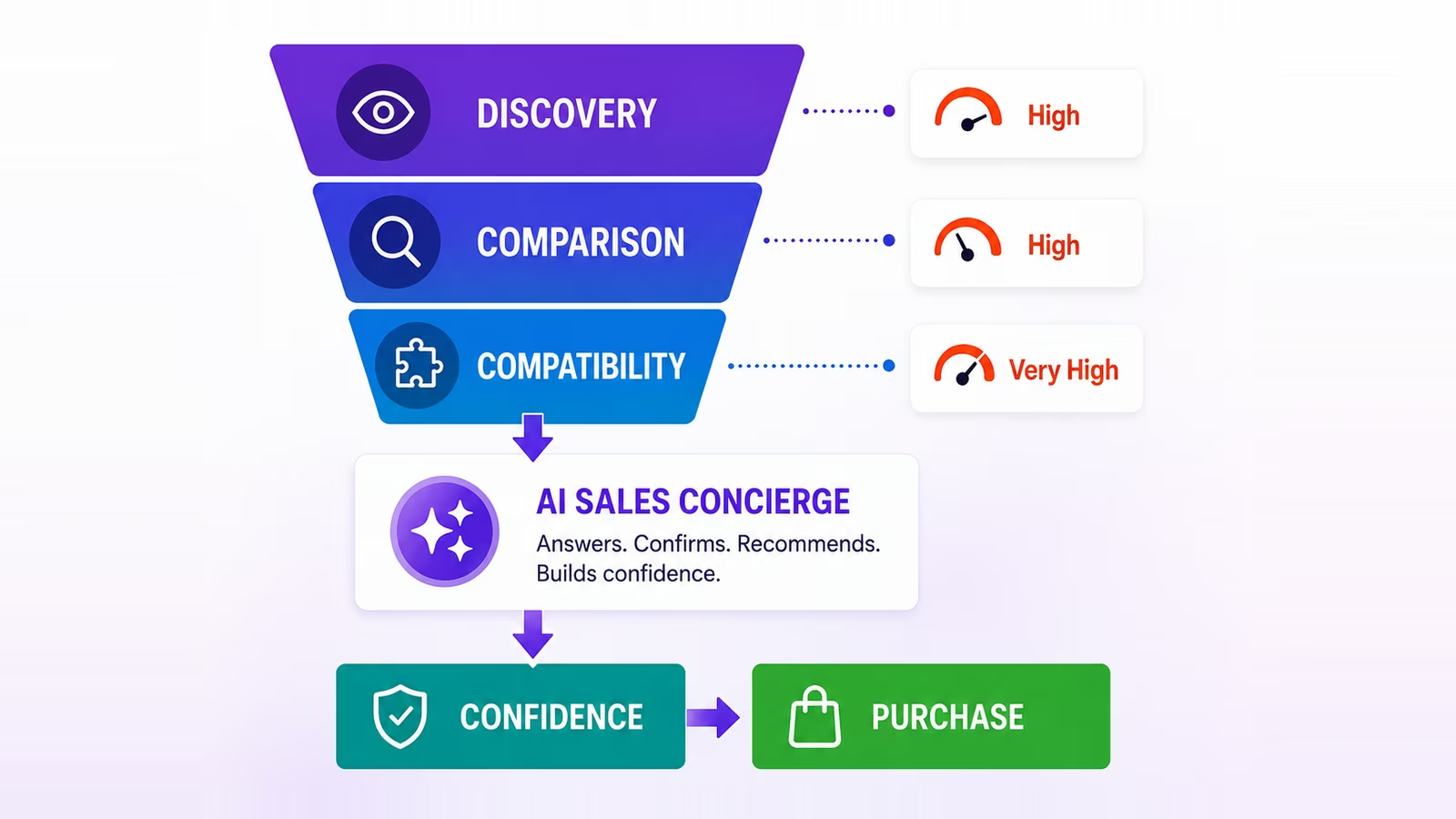
Discovery → Comparison → Compatibility → Confidence → Purchase
Each stage represents a question the shopper needs to resolve.
- Discovery: What products could meet my needs?
- Comparison: What are the meaningful differences between my options?
- Compatibility: Will the product work with my existing setup or circumstances?
- Confidence: Do I understand enough to make the right decision?
- Purchase: Am I ready to buy?
A shopper can make it through discovery and comparison without reaching confidence.
When that happens, the issue may not be the checkout experience. The shopper simply isn’t ready to purchase.
What happens when those questions go unanswered?
Unresolved product questions can have consequences beyond a lost sale.
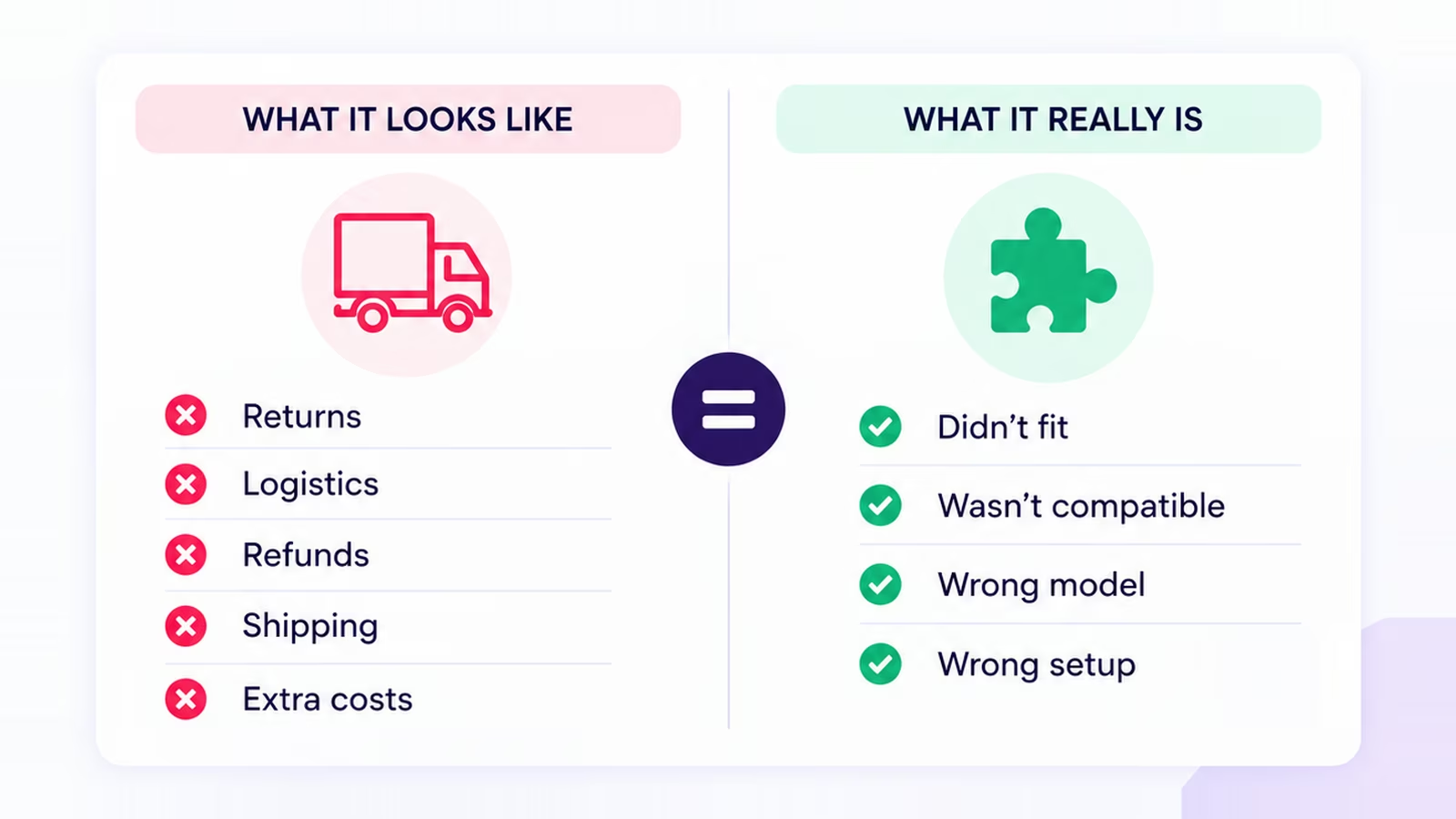
Shoppers may leave without purchasing, contact customer support for clarification, or buy a product that doesn’t match their needs. That can contribute to avoidable returns and a less satisfying customer experience.
For merchants, this means the buying journey deserves attention before the add-to-cart event.
Looking only at cart abandonment can leave an important part of the problem unexplored: shoppers who never felt confident enough to add anything in the first place.
How to help shoppers move from browsing to buying
Improving this part of the journey starts with understanding where shoppers get stuck.
Identify recurring pre-purchase questions
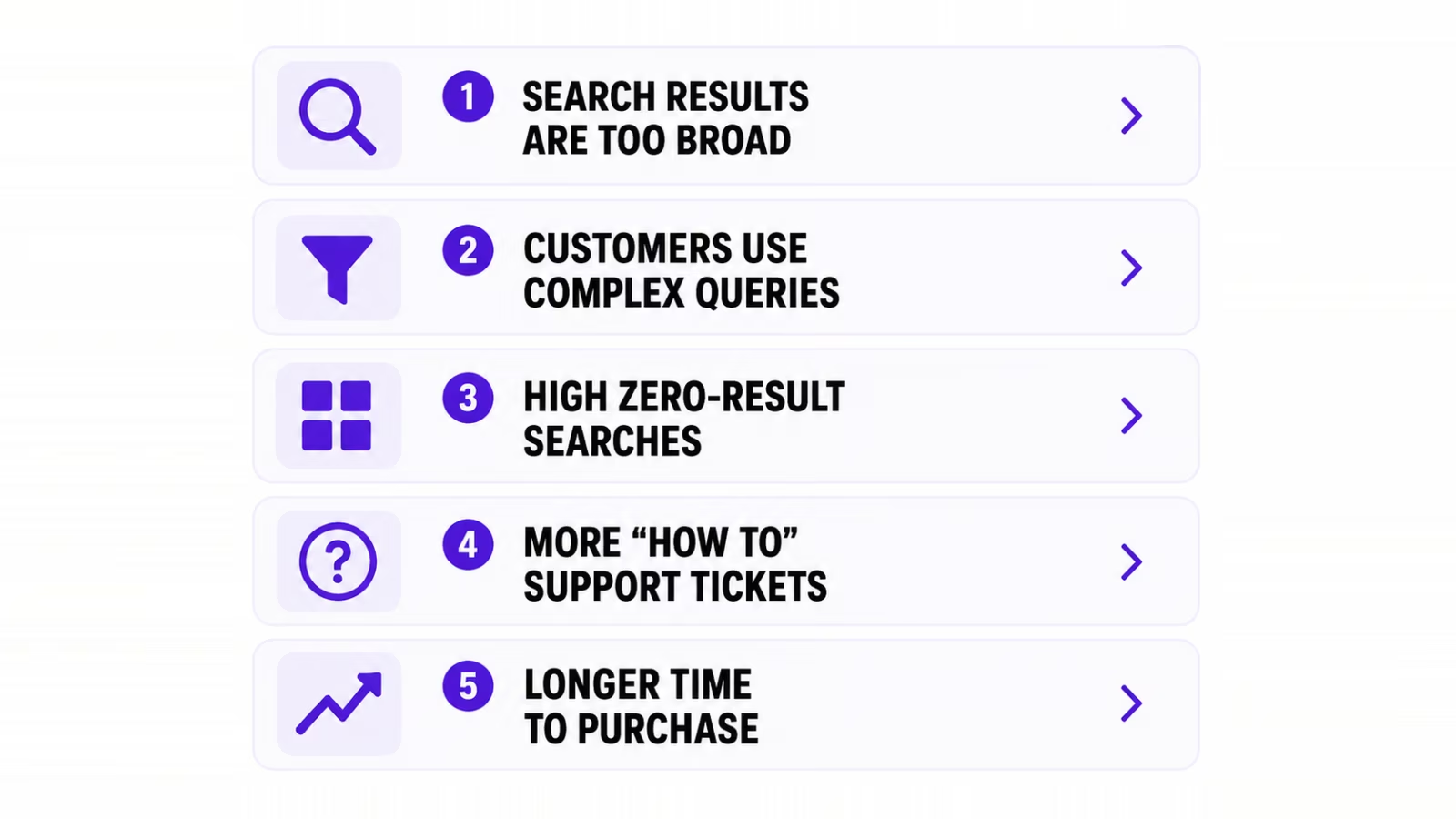
Review the questions customers ask your support team, sales staff, and product specialists. Repeated questions about compatibility, model differences, and use cases can reveal where shoppers need more help.
Make product information easier to understand
Specifications and detailed product descriptions are valuable, but they don’t always explain what those details mean for a particular shopper. Clear comparisons and practical explanations can help customers evaluate their options.
Help shoppers connect their needs to the right products
When a catalog contains many similar products, shoppers may need help narrowing down the options. Guidance that takes their requirements into account can make it easier to understand which products are worth considering.
Provide answers while shoppers are making decisions
Help is most useful when it is available at the point of uncertainty. Shoppers shouldn’t have to leave a product page, search through a support center, or wait for a response just to resolve a basic pre-purchase question.
Where guided selling fits in
Your best salesperson helps shoppers understand what to buy. Chatsi, an AI shopping assistant, brings that kind of guidance to your website: shoppers ask in their own words and get answers based on your own product information. When the next step belongs with your sales team, Chatsi can capture the inquiry so they can follow up.
Prompts on the product page let shoppers ask the question that would otherwise send them away.
Rather than simply helping customers locate a product, the aim is to help them understand their options and resolve questions that might otherwise prevent them from moving forward.
For merchants with complex catalogs, this creates another way to support shoppers during the decision-making process, before they reach the cart.
Want to see how it would work on your catalog? Book a demo.
Look beyond the abandoned cart
Cart abandonment is only one part of the ecommerce conversion problem.
Some shoppers abandon their carts. Others leave before they ever add a product because they haven’t found the information or guidance they need.
Understanding that distinction can help merchants identify friction earlier in the buying journey and improve the experience where decisions are actually being made.
The question isn’t only why shoppers abandon their carts. It’s also what stops them from adding a product in the first place.