5 Signs Your Catalog Has Outgrown Your Search Bar
 Ken Garff, Founder
Your search bar may not be broken. Your store may have outgrown traditional search.
When shoppers struggle to find the right product, the natural response is to improve search. Add filters, reorganize categories, adjust rankings, and introduce more synonyms.
These improvements can make product discovery easier. But they cannot solve every shopping problem.
For merchants selling technical, specialized, or high-consideration products, the challenge is often bigger than helping shoppers find an item. It’s helping them understand which item is right for them.
What traditional ecommerce search does well
Traditional ecommerce search works best when shoppers already know what they’re looking for. They enter a product name, SKU, brand, or model number, and the search function returns relevant results. Filters then help narrow the options by attributes such as price, size, specifications, or compatibility.
This works well when shoppers have a clear idea of what they want.
But what happens when they don’t?
A customer might ask:
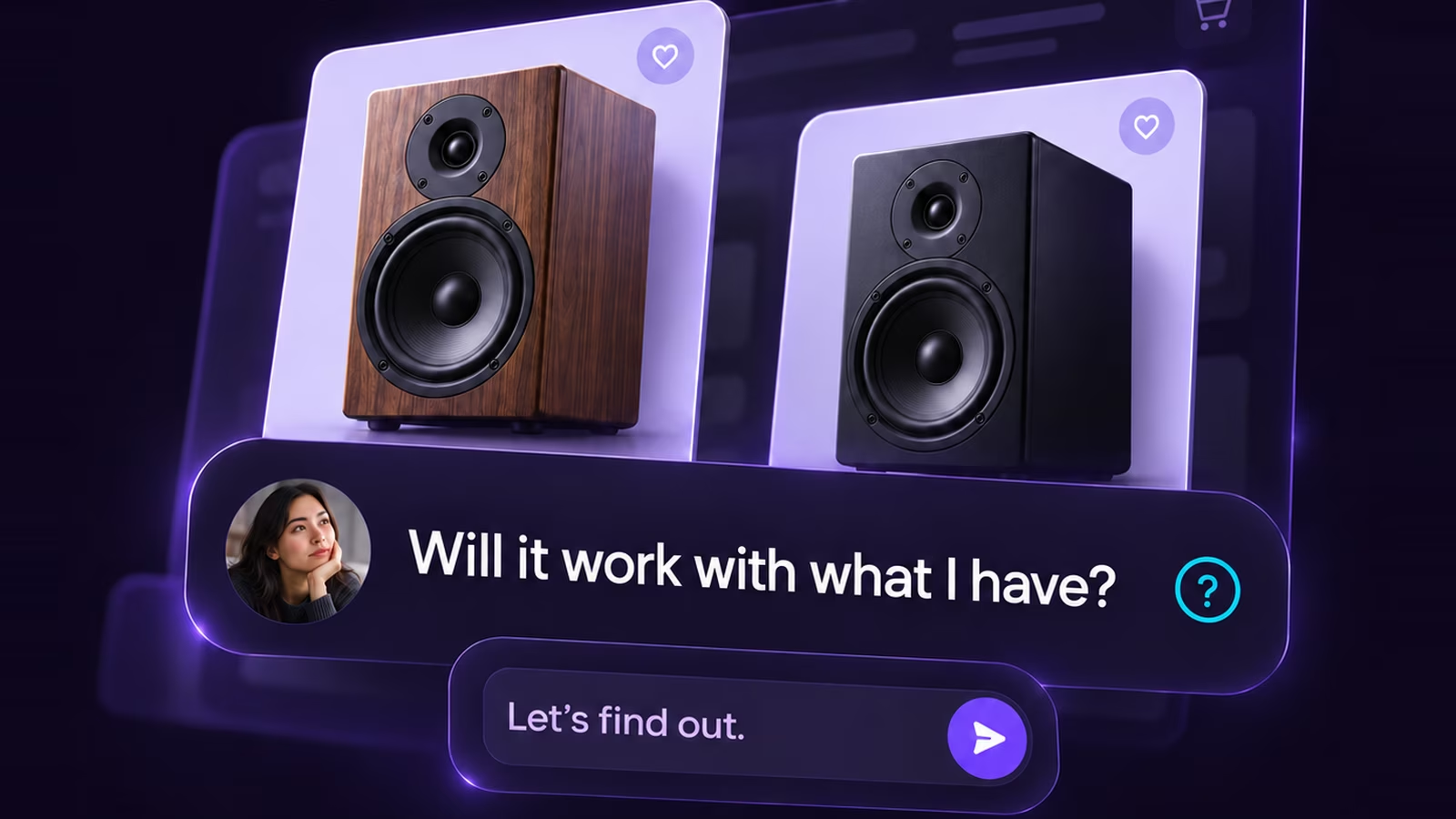
- Which product works best with my current setup?
- What’s the difference between these two models?
- Which option would make the best gift?
- What would work in my small apartment with two dogs and a cat?
Those are not really searches. They are conversations.
These questions require more than matching keywords to product listings. They require understanding the shopper’s situation and helping them evaluate their options.
A search engine helps shoppers find products. Buying guidance helps them understand which products make sense for their needs.
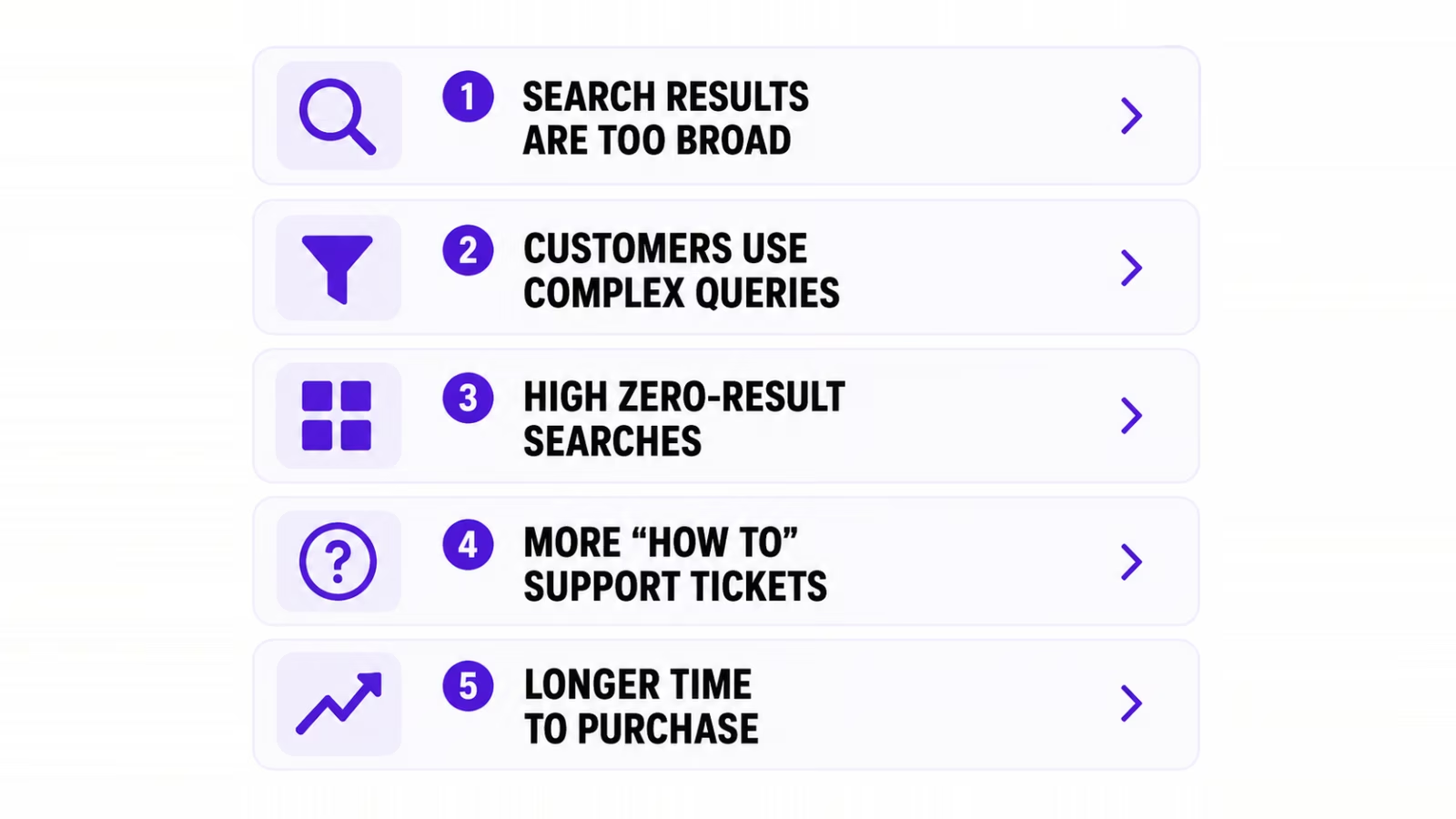
Five signs your ecommerce store may have outgrown traditional search
1. Search results overwhelm shoppers
A large catalog can be an advantage, but only when shoppers can navigate it effectively.
When a search returns dozens of similar products, customers may struggle to understand which options are relevant. More results don’t necessarily mean better product discovery, especially when the differences between products aren’t immediately clear.
Shoppers need help narrowing down their choices based on what matters to them, not just what appears in the search results.
2. Customers describe their needs instead of product names
Not every shopper knows the exact product, model, or specification they need.
Someone shopping for audio equipment might describe the size of their room and the sound they’re looking for. A customer buying automotive parts might explain their vehicle and the problem they’re trying to solve.
These shoppers are expressing a need, not entering a product query.
When your search experience depends on customers already knowing the right terminology, it can make product discovery unnecessarily difficult.
3. Natural-language questions return irrelevant results
Shoppers don’t always communicate in product names and technical specifications. They ask questions in their own words.
A query such as “Which speakers work with my amplifier?” expresses a specific need. A traditional search function may return products containing some of those terms without resolving the underlying compatibility question.
When shoppers can’t find useful answers through the search experience, they may need to navigate product pages manually, search elsewhere, or contact customer support.
4. Your support team repeatedly answers the same pre-purchase questions
Repeated questions can reveal where your shopping experience is falling short.
If customers regularly ask about compatibility, product differences, sizing, or which option suits their needs, they may be struggling to find or interpret the information already available on your site.
Improving product information is one important step. Making that information easier to understand and apply to a customer’s situation is another.
The goal is to make useful product knowledge available when shoppers need it, rather than requiring them to search for every answer themselves.
5. Shoppers browse but still don’t purchase
A visitor can find your store, explore several products, and read the specifications without feeling ready to buy.
The problem isn’t necessarily price, website speed, or checkout friction. Sometimes, the shopper still has an unanswered question.
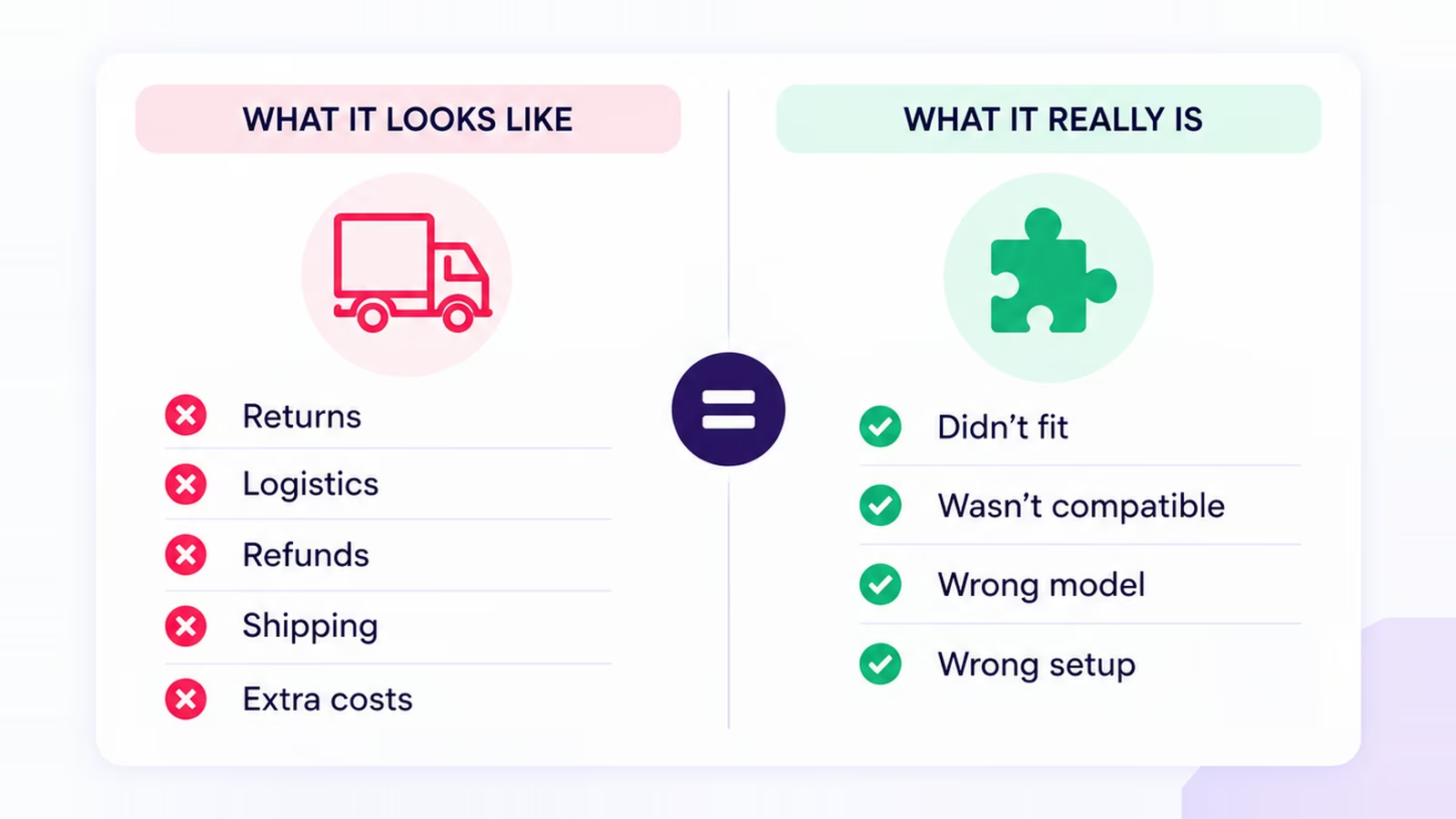
Will the product fit? Is it compatible with their existing equipment? Is the more expensive model worth the difference?
When these uncertainties remain unresolved, shoppers may leave without purchasing.
Looking at on-site search behavior, customer support questions, and product-page engagement together can help merchants identify where customers need more guidance.
What to add alongside search
Recognizing these signs doesn’t mean you should abandon search or filters. Both remain important tools for ecommerce.
Instead, consider how to complement them with a more guided approach to product discovery.
Guided selling allows shoppers to describe what they need, ask questions, and explore relevant options through a conversation. Rather than relying entirely on keywords and filters, the experience can help shoppers clarify their requirements and understand product differences.
For complex catalogs, this creates an opportunity to make product expertise more accessible throughout the buying journey.
How Chatsi guides shoppers alongside search
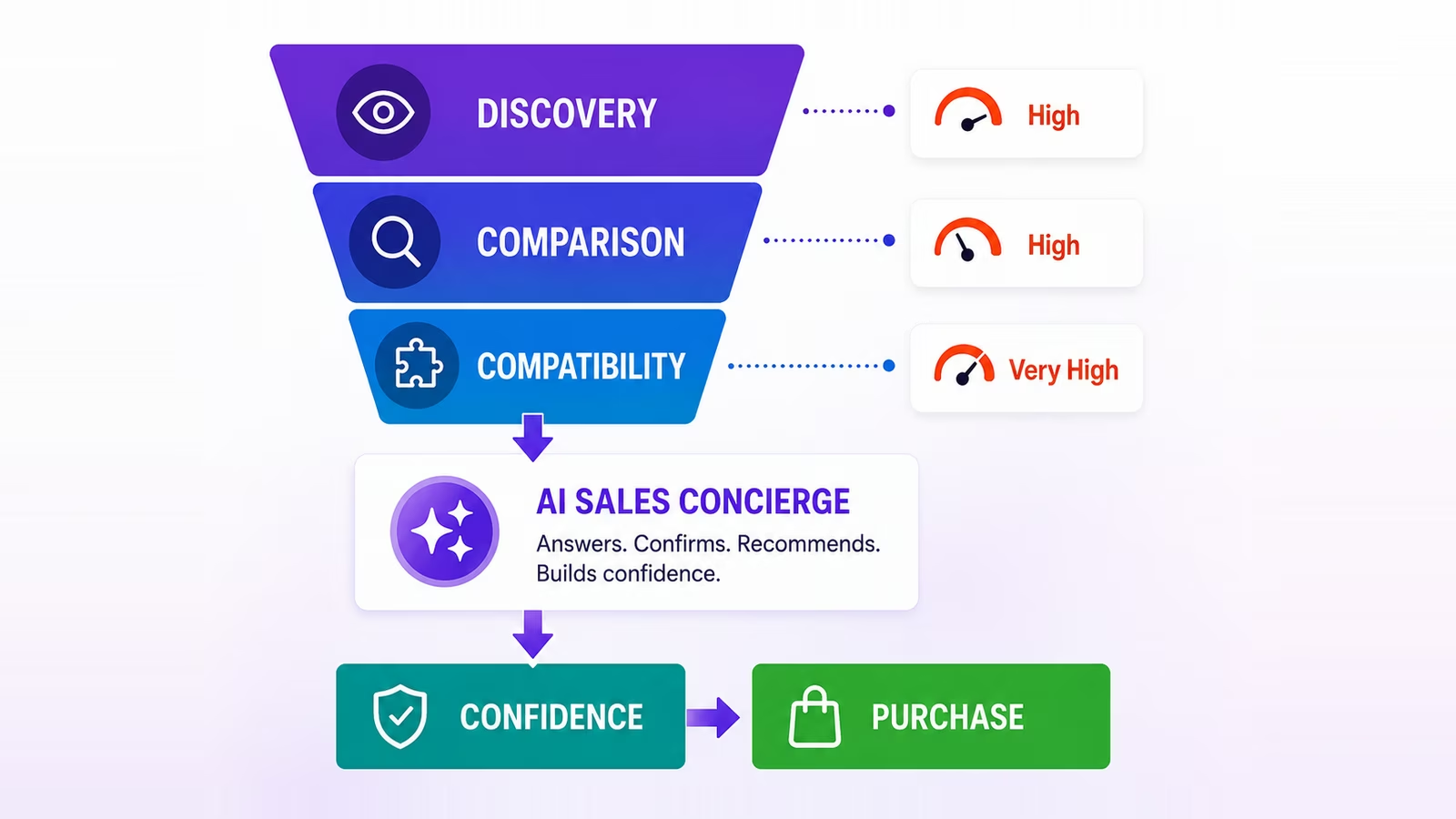
Your best salesperson helps shoppers understand what to buy. Chatsi, an AI shopping assistant, brings that kind of guidance to your website: shoppers ask in their own words and get answers based on your own product information. When the next step belongs with your sales team, Chatsi can capture the inquiry so they can follow up.
Chatsi can sit in an “Ask AI” box where the search box was, so shoppers ask a question instead of guessing keywords.
The aim is to help customers move beyond simply finding products toward understanding which options fit their needs.
For merchants selling technical, specialized, or high-consideration products, this approach can complement traditional search by addressing questions that filters and product listings alone may not resolve.
The next step in product discovery isn’t just helping shoppers find more products. It’s helping them choose the right one.
If shoppers regularly struggle to find answers on your site, it may be worth asking a different question: does your store need better search, or does it need a better way to guide customers?
Want to see how it would work on your catalog? Book a demo.