Return Rates Aren’t Just a Logistics Issue. They’re a Compatibility Problem.
 Ken Garff, Founder
Returns are often treated as an unavoidable part of ecommerce.
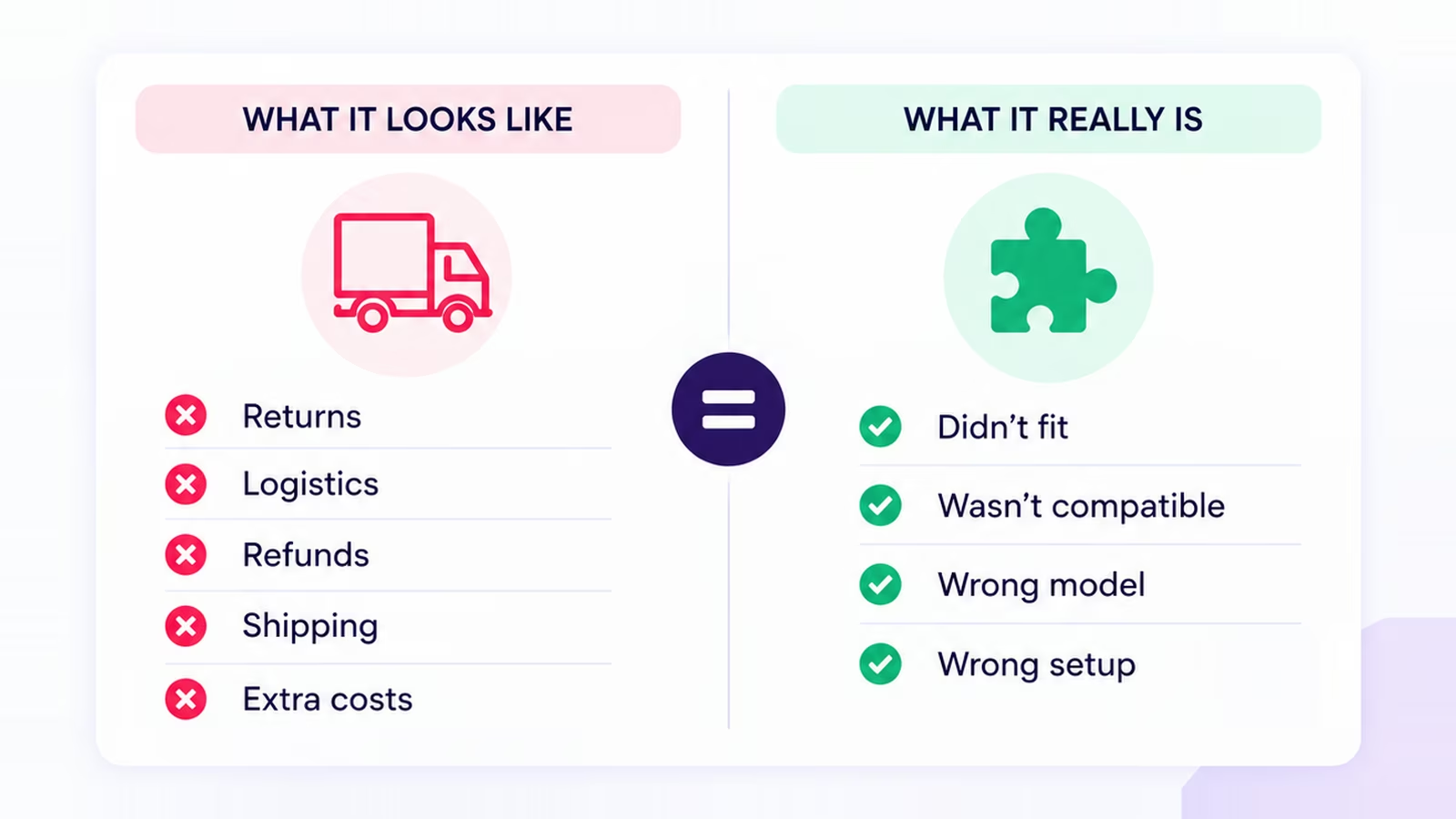
Customers order products, some items don’t work out, and the products come back. Merchants then focus on the return process, refund policies, and the operational costs involved.
But there’s another question worth asking: Could some returns be prevented before the customer makes the purchase?
For stores selling technical, complex, or high-consideration products, the answer may start with helping shoppers make better-informed decisions.
Some returns begin before the purchase
Not every return happens because a customer changes their mind.
Sometimes, the product simply wasn’t right for them.
It might not fit, work with their existing setup, meet their requirements, or match what they expected. In other cases, the customer may have selected the wrong version or missed an important detail when comparing similar products.
These situations can point to a problem earlier in the buying journey: the customer made a decision without having all the information they needed to choose confidently.
A return is the visible outcome. The uncertainty that contributed to the purchase may have appeared much earlier.
Why shoppers choose the wrong product
Choosing the right product isn’t always straightforward, especially when a store offers a large catalog of similar options.
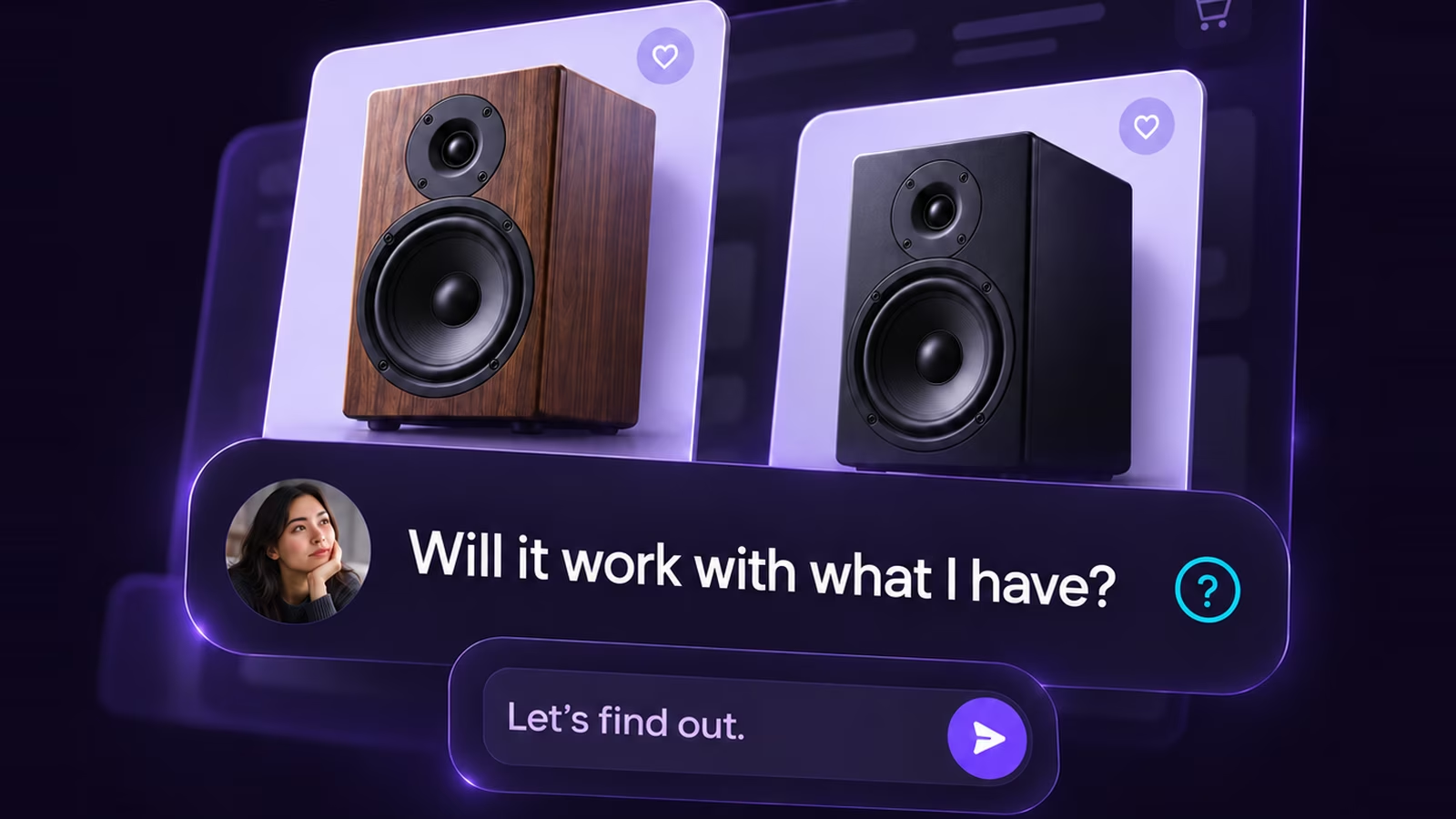
Consider a customer shopping for audio equipment. Two products might look similar on a product listing, but differ in connectivity, power requirements, or compatibility with the customer’s existing equipment.
Or imagine someone purchasing an automotive part. Finding an item that looks correct doesn’t necessarily mean it fits their specific vehicle.
In these situations, shoppers may struggle with questions such as:
- Is this compatible with what I already own?
- Which version do I actually need?
- What’s the practical difference between these options?
- Does this product meet my specific requirements?
- Is there anything else I need for it to work properly?
If these questions remain unanswered, customers may make assumptions or choose a product that doesn’t meet their needs.
If those questions go unanswered, the purchase can still happen. So can the return.
Product information isn’t the same as buying guidance
Detailed product pages are essential. Specifications, dimensions, compatibility information, and clear descriptions all help shoppers understand what they’re considering.
But presenting information doesn’t always make the decision easy.
Customers still need to interpret those details, compare alternatives, and determine which product is suitable for their circumstances.
For complex products, the challenge isn’t necessarily a lack of information. It can be the difficulty of understanding what that information means for an individual purchase.
Good buying guidance connects product information to the customer’s actual needs.
Instead of leaving shoppers to work through every detail independently, merchants can help them understand relevant differences, identify compatibility requirements, and narrow down suitable options.
How to help customers choose the right product the first time
Reducing preventable returns starts with making better decisions easier before checkout.
1. Make compatibility information clear
If a product must work with a particular vehicle, device, system, or setup, help customers understand those requirements before purchasing.
Don’t assume that shoppers know which specifications matter or how to interpret them.
2. Explain the differences between similar products
When multiple products appear nearly identical, customers need to understand what distinguishes them.
Clear comparisons can help shoppers identify which features matter for their needs and avoid selecting an unsuitable model.
3. Help shoppers identify what they actually need
Not every customer knows the exact product name or specification they’re looking for. Some understand their problem but need help identifying the right solution.
Questions about intended use, existing equipment, or specific requirements can help narrow down the options.
4. Address questions before checkout
Don’t wait until a customer contacts support after receiving the wrong product.
Make it easier for shoppers to resolve important questions while they’re still evaluating their options. This gives them a better opportunity to identify potential mismatches before placing an order.
5. Learn from the returns you’re already receiving
Return reasons can help merchants identify recurring problems.
If customers repeatedly return products because of compatibility issues, incorrect versions, or unmet expectations, review the information and guidance available before purchase.
These patterns can reveal where product pages, comparisons, or the buying experience need improvement.
Guidance before the order, not after the return
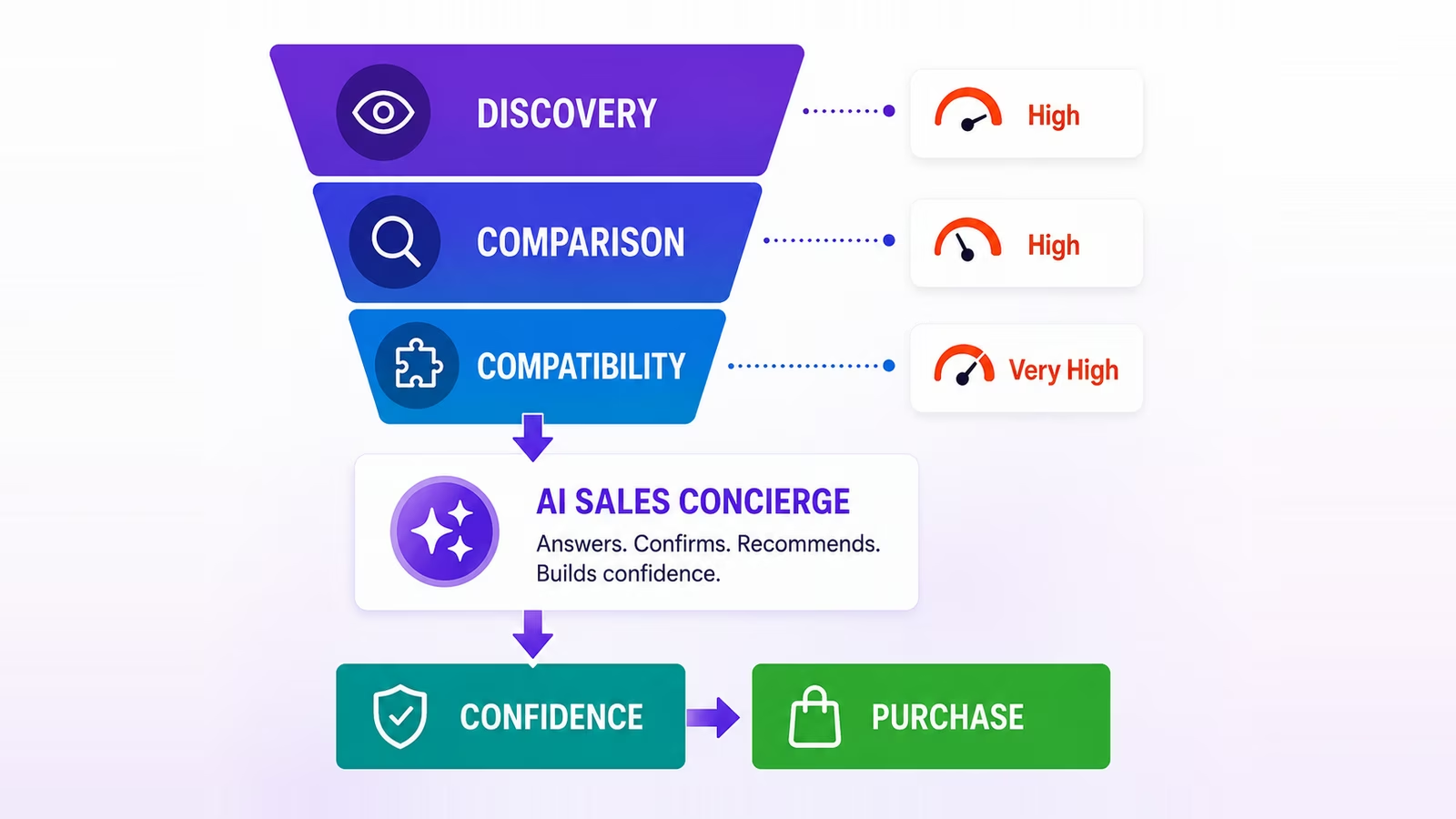
Your best salesperson helps shoppers understand what to buy. Chatsi, an AI shopping assistant, brings that kind of guidance to your website: shoppers ask in their own words and get answers based on your own product information. When the next step belongs with your sales team, Chatsi can capture the inquiry so they can follow up.
Shoppers can raise compatibility questions before they order, while there’s still time to choose a different product.
For stores with complex catalogs, this creates another way to help customers understand their options before making a purchase.
A shopper who is unsure about compatibility or the differences between two models can ask questions during the buying process rather than having to piece together the answers independently.
The objective isn’t simply to help customers buy faster. It’s to help them make a more informed choice.
Better guidance alone won’t prevent every return. Products can still arrive damaged, expectations can change, and other issues can occur after purchase. But helping customers understand what they’re buying may reduce some mismatches that begin with an unsuitable product choice.
Want to see how it would work on your catalog? Book a demo.
Think beyond the return itself
Returns are an important operational metric, but they can also offer insight into the customer experience that came before them.
When customers repeatedly buy the wrong version, overlook compatibility requirements, or discover that a product doesn’t meet their needs, the return may be a sign that something could have been clearer earlier in the journey.
For ecommerce merchants, improving the buying experience means looking beyond the transaction and asking whether customers had the guidance they needed to choose well.
The best return experience is important. But helping customers choose the right product in the first place is worth just as much attention.