The Future of AI Token Costs: What Merchants Should Know
 Ken Garff, Founder
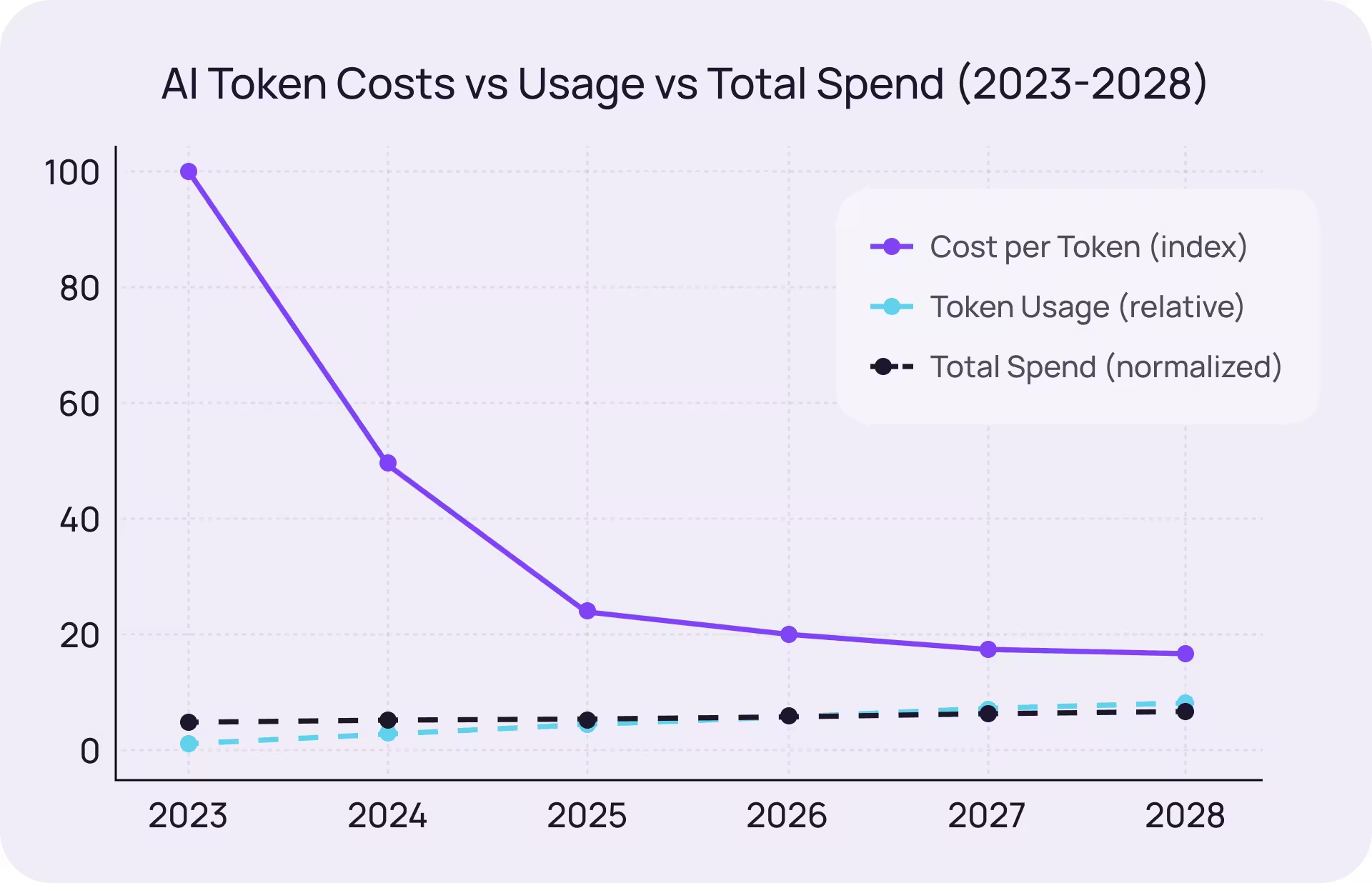
If you’ve been following the world of AI, you’ve probably noticed that the cost of tokens—the little units that power every conversation, recommendation, and analysis—has dropped dramatically in the past few years. This has been fueled by big venture capital subsidies and a fierce race between major providers to grab market share. In some cases, token prices have fallen by 75–90%. But here’s the catch: many experts believe this steep decline won’t last forever. As the market matures, subsidies shrink, and energy costs rise, token prices may stop falling, and in some scenarios, they could even creep back up.
For merchants using AI sales agents embedded on their website, this is both good news and a planning opportunity. AI is actually starting to ‘think’ more deeply, review more product options before recommending, track the shopper's intent better, and carry on much richer and full conversations. That means more tokens are consumed per interaction, even if each token is getting cheaper. At Chatsi we have found that simple product recommendations use about 2000 tokens by the time we process available products with a multi-faceted question like, “Help me find a gift for my mom, she is 65, likes to travel, and is fashion-minded.” Other queries go deeper into vast documents to really understand complex product specs, or the setup of products or even trouble shoot problems. These queries require 30-50K tokens and work through much more knowledge to generate expert-level answers. Predicting token usage is challenging because we never know how much 'processing power' will be required to answer a given shopper question. Usage complexity is one important factor in thinking about and planning for token costs.
We can think of token prices like gasoline to a delivery business, even with prices falling a thriving delivery business may add more vehicles to the fleet increasing overall costs. Yes, each gallon of gasoline (in our case AI tokes) may cost less, but your overall fuel bill may not go to zero and may rise over time. Consumption may increase because your operations are expanding. With AI, as we move into deeper agent reasoning and more complex customer scenarios, we’ll naturally want to use more tokens to deliver better outcomes. So while token prices may continue to decline, the prevailing thinking is that total token usage is likely to climb. The smart move for merchants is to expect a balance: falling per-token costs will likely be offset by rising consumption. At the same time technology is improving and AI models are getting better and everyone is working toward more efficiency at all levels of AI token use.
That means planning budgets with some cushion, knowing that while you’re unlikely to see runaway costs, or break the budget, you also won’t be paying zero and will likely consume more AI tokens over time while the quality of AI conversations and the ROI / revenue impact from those tokens improves. In other words, in the realm of AI sales agents, you’ll be getting more sales and better customer experiences for roughly the same investment.
Vendor Pro Tip: We suggest merchants look for vendors whose approach to token tracking and pricing is rooted in simplicity and transparency. Consider vendors who track consumption based on industry standard AI token usage in real time. Look for ways to set caps or achieve some level of predictable spending while ensuring your AI sales assistant delivers measurable value to your bottom line. Be wary of high ‘per-conversation’ charges (we have seen $.60-$1.00 / per chat) or 'revenue-share' scenarios that seem cheap upfront but later exploit merchants and erode unit profits. Token prices may naturally fluctuate with the AI industry, but merchants who plan to invest in reasonable and transparent token usage will be best positioned to capture the most growth from AI-assisted commerce activities.